Inclusie: de sleutel tot betere samenwerking, innovatie en gelijkheid.
Tijdens de masterclass ‘Strategic Inclusion’ liet Raisa Ghazi zien hoe organisaties inclusie strategisch en planmatig kunnen integreren: van methoden voor effectieve DEI tot het aanpakken van biases. Ook gaf ze praktische handvatten en opdrachten gericht op persoonlijke groei en branding. Zo inspireerde ze ons om zelf actie te ondernemen en inclusieve werkomgevingen te creëren, terwijl we tegelijkertijd werken aan onze eigen groei en impact.
Opening KLM: ‘Samen de berg beklimmen’
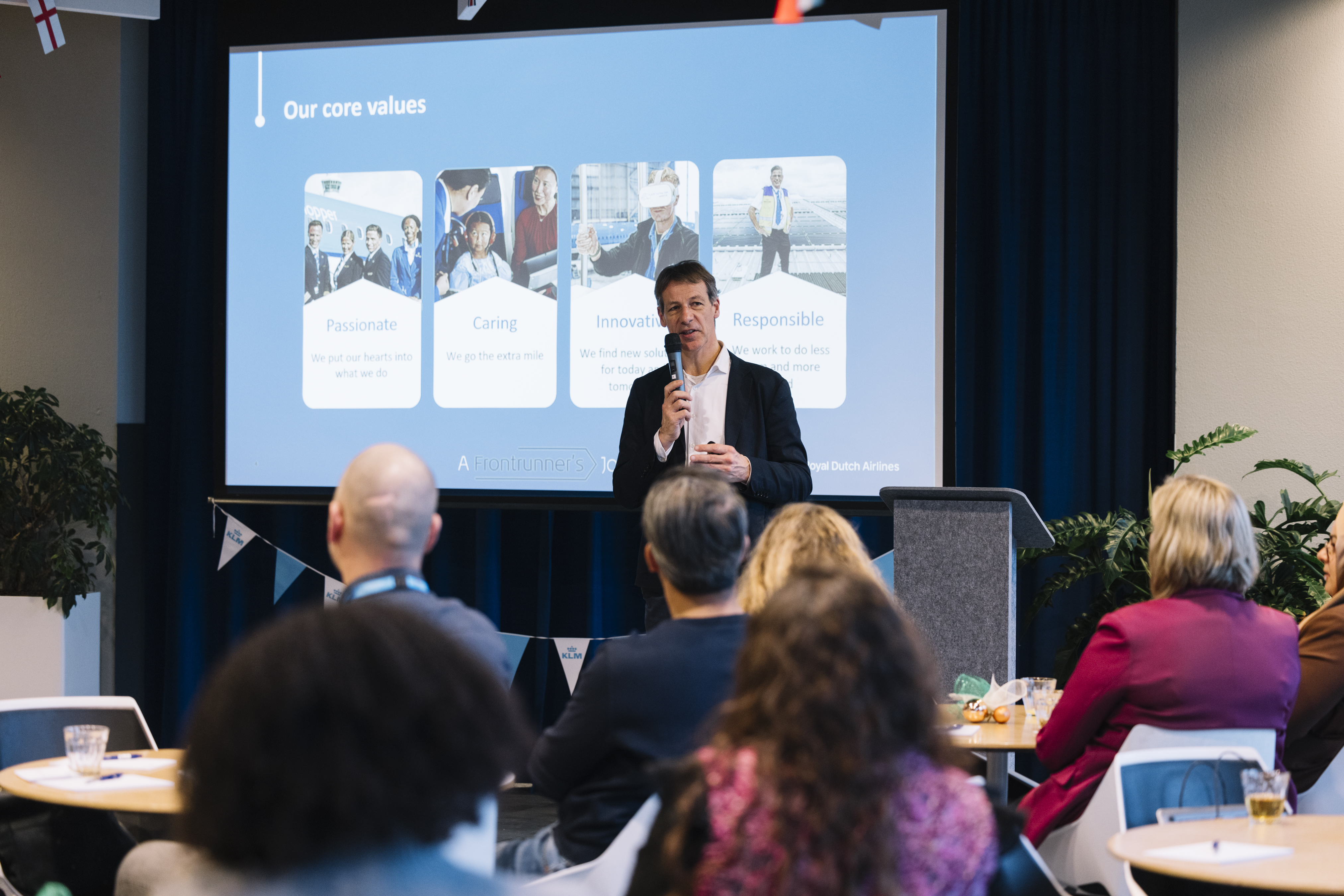
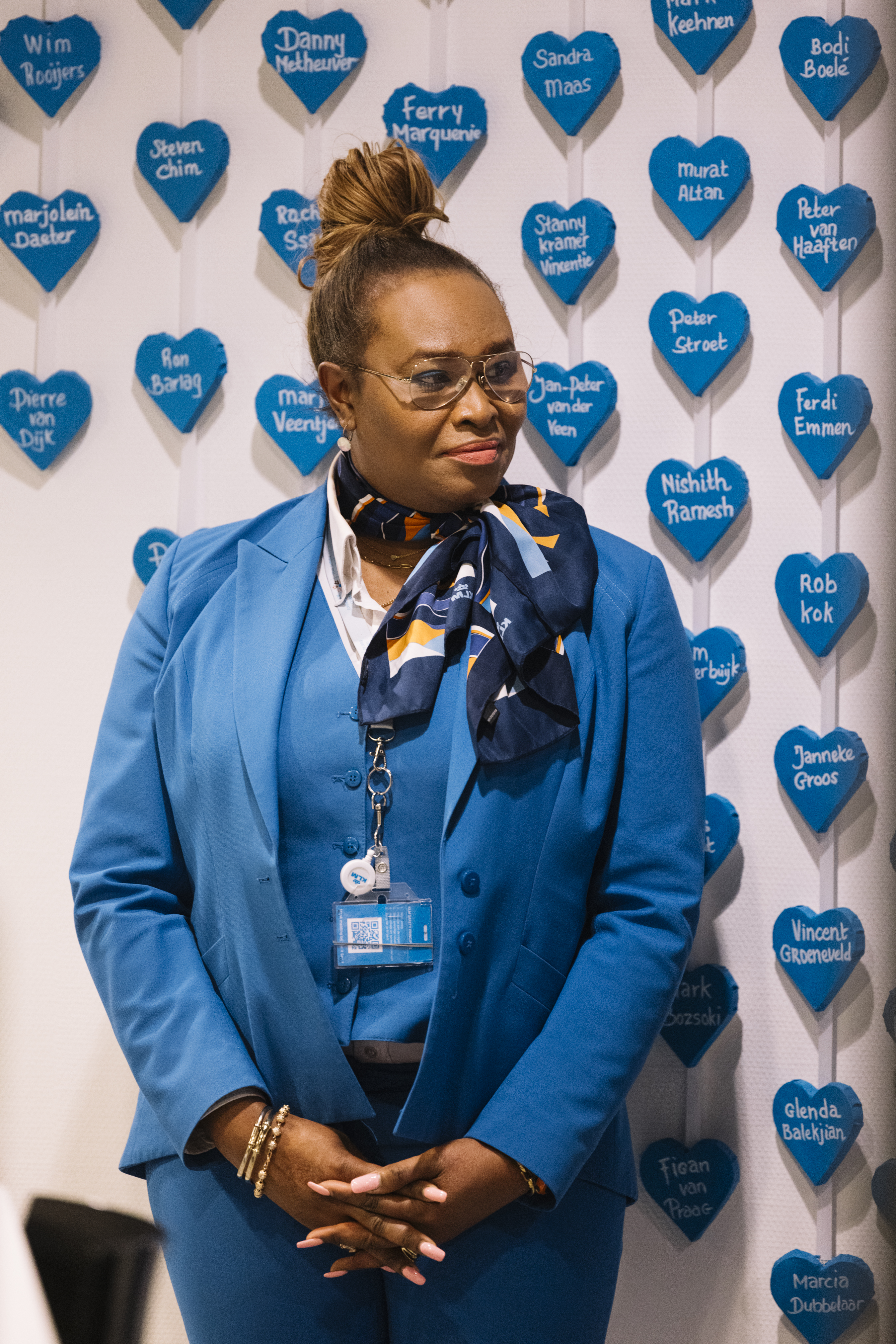
De sessie vond plaats bij member KLM. Executive Vice President Adriaan den Heijer legde in zijn openingswoord uit hoe de kernwaarden passionate, caring, innovative en responsible de dagelijkse basis vormen voor de organisatie en hiermee ook worden vertaald op het gebied van diversiteit en inclusie.
Hoewel er al mooie mijlpalen behaald zijn, is dit een alsmaar doorgaande reis die niet altijd makkelijk is, legt hij uit. “Om bruggen te kunnen bouwen, moeten we eerst de berg beklimmen om stap voor stap dichter bij ons doel te komen.” Er wordt nog altijd - bewust maar vaak onbewust - bevooroordeeld gedrag getoond op de werkvloer. En dus blijft KLM werken aan het vergroten van bewustwording, het doorbreken van patronen en het creëren van een cultuur waarin iedereen zich gehoord en gewaardeerd voelt. Wat daarbij helpt, is het stellen van duidelijke targets en netwerken binnen de organisatie, zoals Connecting Colours en Women on Board. “Zij vormen de motor om samen die berg te beklimmen.”
Het belang van een goede strategie
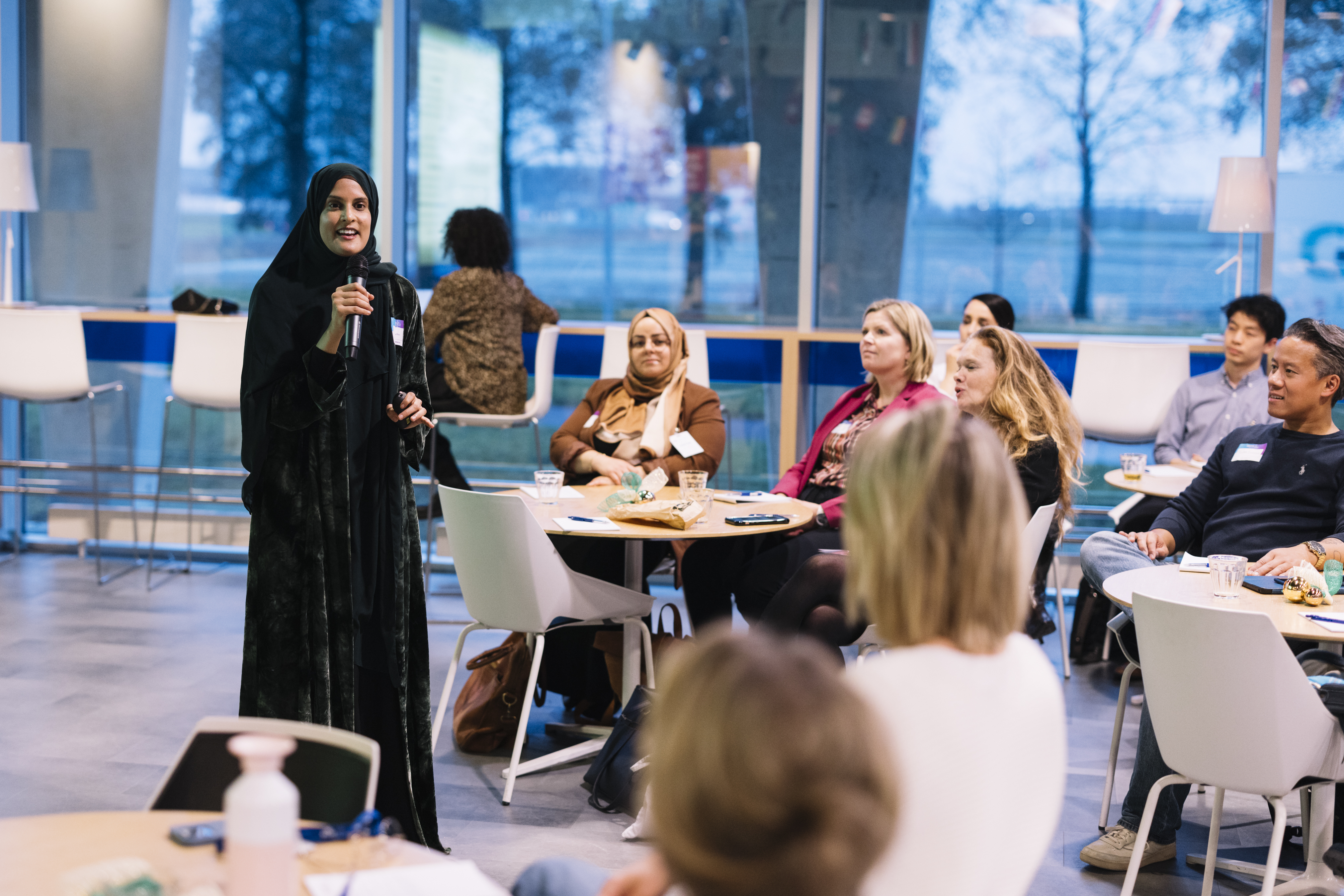
Inclusief leiderschap is niet alleen de fundering, maar ook de drijvende kracht achter duurzame verandering. Met haar scherpe inzichten nam Raisa Ghazi ons vervolgens mee in de wereld van strategische inclusie. Ghazi is een bekroond spreker, universitair docent, content creator en expert op het gebied van inclusief leiderschap en vrouwelijk leiderschap. Zij liet zien hoe organisaties inclusie zouden moeten omarmen als een strategische pijler om innovatie te stimuleren, samenwerking te versterken en een werkomgeving te creëren waar iedereen tot zijn recht komt.
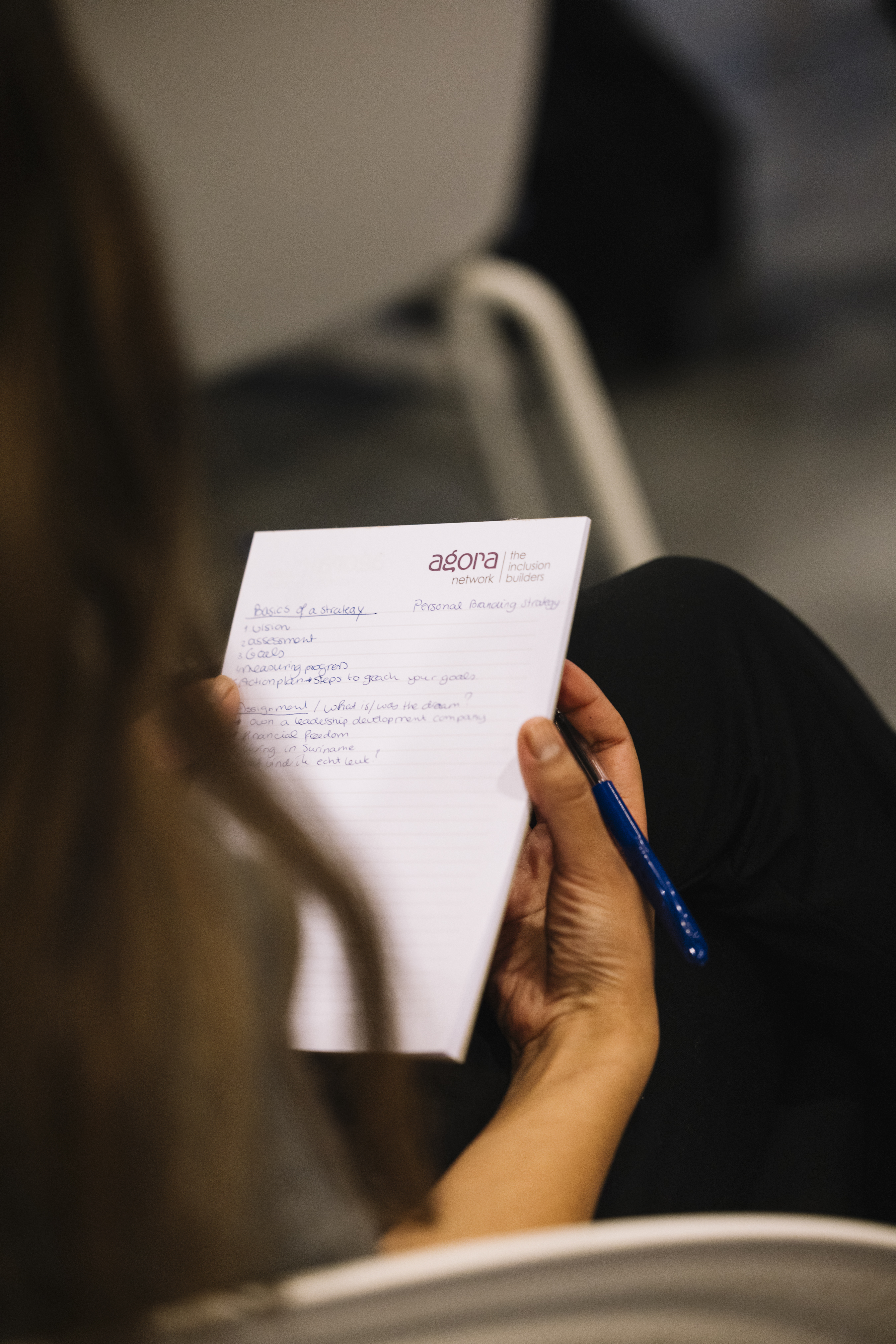
Dat lijkt soms een grote opgave. Waar begin je? Vaak kun je in je eigen omgeving al een verschil maken. Dit doe je door op zoek te gaan naar je eigen persoonlijke merk. “Jullie zijn allemaal ambassadeurs van verandering,” vertelde Ghazi. Om tot deze persoonlijke branding te komen, heb je een strategie nodig: 80 procent van het succes hangt namelijk af van een goede strategie, terwijl slechts 20 procent gebaseerd is op onze vaardigheden. Een strategie kent vijf basics: visie, analyse, doelen stellen, voortgang meten en een actieplan.
Methoden voor effectieve DEI
Inclusie vraagt ook om een bredere aanpak binnen organisaties. Ghazi behandelde daarom praktische strategieën voor diversiteit, gelijkheid en inclusie (DEI). Ze benadrukte het belang van:
- Luisteren en vragen stellen: door echte gesprekken te voeren en goed te luisteren, kun je verborgen obstakels in de organisatie opsporen en aanpakken. Zorg er wel voor dat je iemands waarden of intenties niet in twijfel trekt, want dit kan leiden tot defensieve reacties en weinig resultaat.
- HR-capaciteiten versterken: inclusie moet verweven zijn in alle HR-processen.
- Leiderschap en commitment: DEI-strategie moet een integraal onderdeel zijn van de bedrijfsstrategie. Hogere leidinggevenden spelen een cruciale rol als sponsors.
- Doelen stellen en voortgang meten: duidelijke meetbare resultaten helpen inclusie concreet te maken.
- Authenticiteit: Voorkom windowdressing en wees oprecht in DEI-initiatieven, omdat werknemers en klanten snel door onechtheid heen prikken.
Biases doorbreken
Soms is er weerstand tegen het onderwerp DEI. Vaak komt dit door onbewuste vooroordelen. Onderzoek laat zien dat hoewel veel mensen zich bewust zijn van hun biases, ze vaak niet beschikken over praktische methoden om deze aan te pakken. Iedereen heeft, bewust of onbewust, te maken met biases. Deze worden al vroeg gevormd, maar kunnen worden doorbroken met de juiste aanpak:
- Zelfbewustzijn vergroten: leer je eigen biases kennen, bijvoorbeeld met tools zoals de Harvard Implicit Association Test (https://implicit.harvard.edu/implicit/index.jsp)
- Diversiteit in netwerken vergroten: omring jezelf met mensen van verschillende achtergronden om je perspectief te verbreden.
- Historische context leren begrijpen: begrijp hoe geschiedenis invloed heeft op huidige structuren en biases.
- Tokenisme en windowdressing vermijden: zorg dat inclusie oprecht en authentiek wordt toegepast in je DEI-initiatieven.
- Je eigen privileges herkennen: wees je bewust van de privileges die je hebt en hoe deze jouw perspectief beïnvloeden.
Terug naar de basis
In het kader van personal branding gaf Ghazi ons gedurende de masterclass mooie en reflectieve opdrachten mee. Ze vroeg ons terug te gaan naar de dromen uit onze kindertijd. Die dromen hoeven nu misschien niet meer realistisch te zijn, maar het gaat erom dat je de eigenschappen, passies en waarden begrijpt die je toen aanspraken. En: droom groot. “Als je dromen je niet bang maken, zijn ze niet groot genoeg,” citeerde ze Ellen Johnson Sirleaf, de eerste vrouwelijke president van Liberia.
 
Persoonlijke reflecties
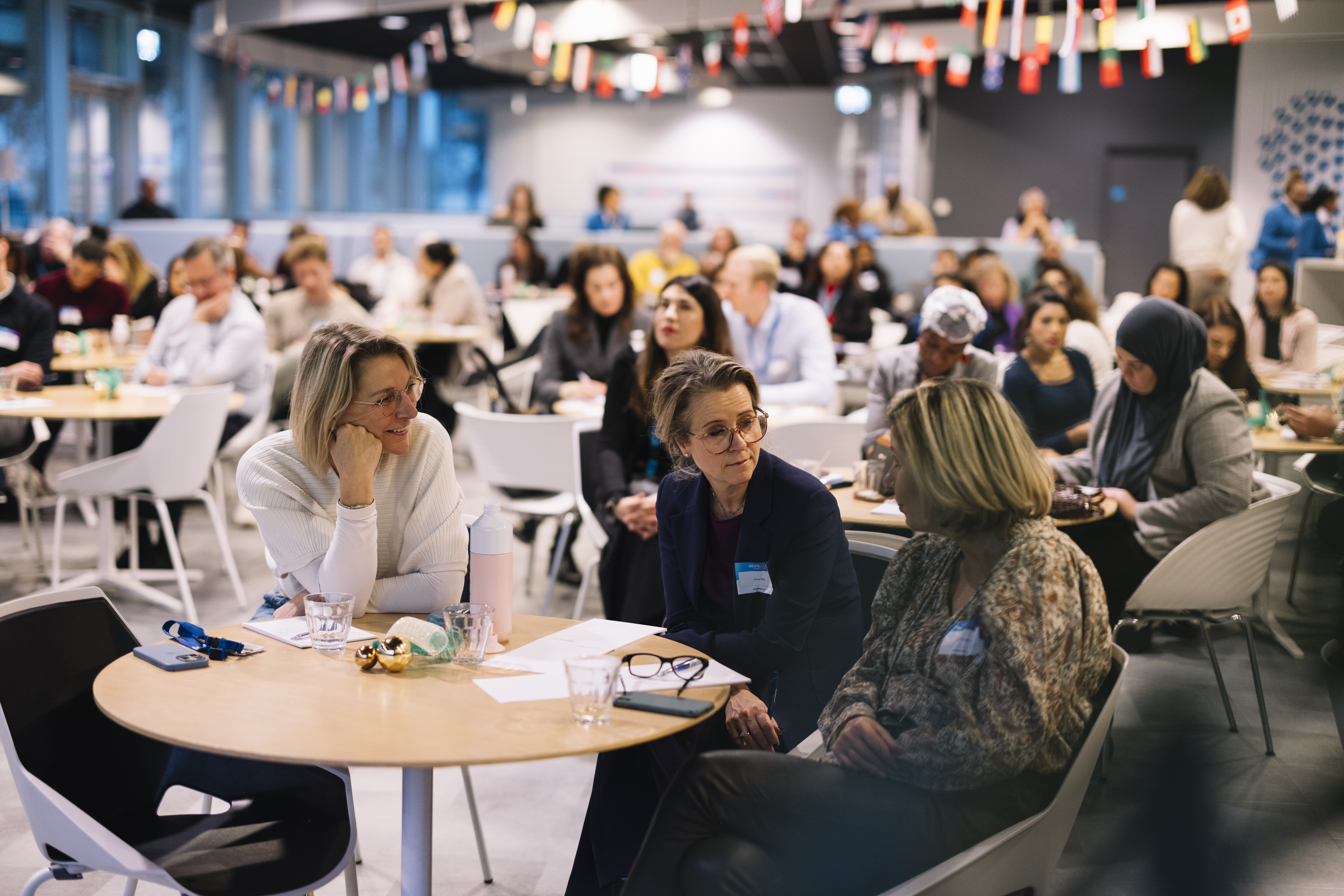
Sommigen herontdekten oude dromen, zoals piloot worden of reizen om impact te maken. Anderen identificeerden unieke krachten, zoals het zorgen voor anderen. Door inzicht te krijgen in onze passies, sterke kwaliteiten en mensen die we bewonderen probeerden we steeds meer tot de kern te komen van onze persoonlijke droom. Ook stelden we doelen voor de korte en lange termijn. We bespraken deze met elkaar en identificeerden mentale blokkades die het bereiken van onze dromen in de weg stonden.
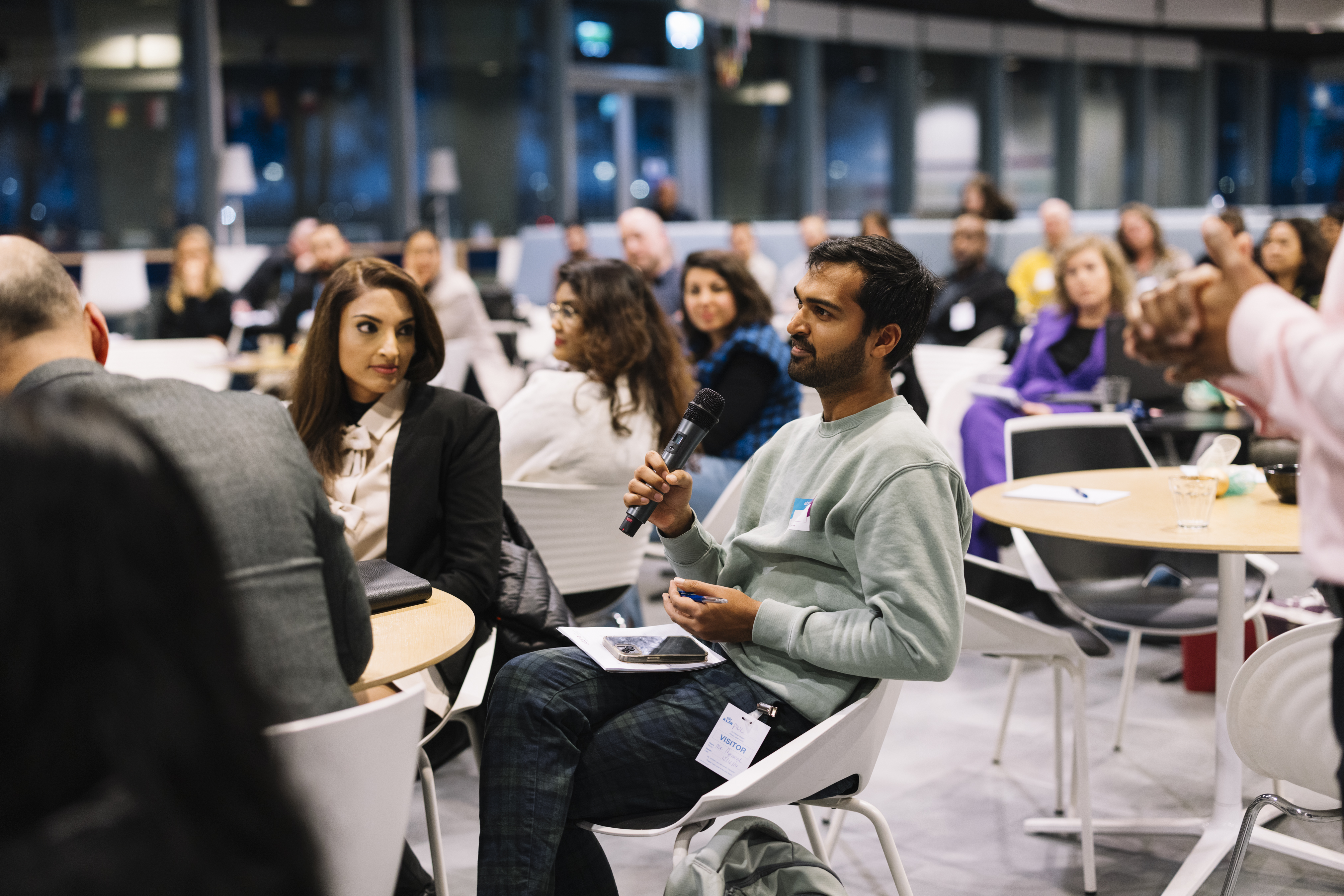
Ter afronding deelden we uitspraken met elkaar die ons inspireren. En daar zaten veel mooie woorden tussen, zoals “je mag de moed verliezen, maar nooit de hoop opgeven.” Ghazi sloot de sessie af met een oproep om consistent aan inclusie te werken, zowel in kleine als grote acties. “Iedereen heeft invloed, hoe klein ook. Door dagelijks je omgeving een beetje inclusiever te maken, kun je echte verandering creëren.”
Gedurende de masterclass zijn er veel mooie foto’s genomen. Via deze link kunt u door het album bladeren. Daarnaast kunt u via deze link de slides van de masterclass terugvinden.
-----------------------------------------------------------------------------------
English
Inclusion: the key to better collaboration, innovation, and equality
During the masterclass ‘Strategic Inclusion,’ Raisa Ghazi demonstrated how organizations can strategically and systematically integrate inclusion: from methods for effective DEI to addressing biases. She also provided practical tools and assignments focusing on personal growth and branding. She inspired us to take action, create inclusive workplaces, and work on our own growth and impact.
Opening by KLM: ‘Climbing the mountain together’
The session took place at KLM, where Executive Vice President Adriaan den Heijer explained in his opening speech how the core values of passionate, caring, innovative, and responsible form the foundation of the organization’s daily operations and are also reflected in their approach to diversity and inclusion.
Although significant milestones have been achieved, this remains an ongoing journey that is not always easy, he explained. “To build bridges, we first have to climb the mountain step by step to get closer to our goal.” Conscious and unconscious biased behavior is still present in the workplace. That is why KLM continues to focus on increasing awareness, breaking patterns, and creating a culture where everyone feels heard and valued. Clear targets and internal networks, such as Connecting Colours and Women on Board, help achieve this. “They are the engine driving us to climb the mountain together.”
The importance of a good strategy
Inclusive leadership is not only the foundation but also the driving force behind sustainable change. With her sharp insights, Raisa Ghazi guided us into the world of strategic inclusion. Ghazi is an award-winning speaker, university lecturer, content creator and expert in inclusive leadership and women’s leadership. She demonstrated how organizations should embrace inclusion as a strategic pillar to foster innovation, enhance collaboration, and create a workplace where everyone can thrive.
This may seem like a daunting task. Where do you start? Often, you can make a difference in your immediate environment by finding your personal brand. “You are all ambassadors of change,” Ghazi said. To achieve this personal branding, you need a strategy: 80% of success depends on a solid strategy, while only 20% is based on our skills. A strategy is built on five basics: vision, analysis, goal setting, progress measurement, and an action plan.
Methods for Effective DEI
Inclusion also requires a broader approach within organizations. Ghazi therefore presented practical strategies for diversity, equality and inclusion (DEI). She emphasized the importance of:
- Listening and asking questions: by having genuine conversations and listening within the organization, you can identify and address hidden obstacles. Avoid creating self-threat (making someone feel their values or intentions are being questioned). When someone’s values are questioned, this can lead to defensive behavior and unproductive outcomes.
- Strengthening HR capabilities: inclusion must be embedded in all HR processes.
- Leadership and commitment: DEI strategies must be an integral part of business strategies. Senior leaders play a crucial role as sponsors.
- Setting goals and measuring progress: clear measurable results help make inclusion tangible.
- Authenticity: avoid window dressing and ensure that DEI initiatives are genuine, as employees and customers quickly see through insincerity.
Breaking biases
Sometimes, there is resistance to the topic of DEI. This often stems from unconscious biases. Research shows that while many people are aware of their biases, they often lack practical methods to address them. Everyone, consciously or unconsciously, deals with biases. These biases are formed early in life but can be broken with the right approach:
- Increase self-awareness: learn about your biases, for example by using tools like the Harvard Implicit Association Test (https://implicit.harvard.edu/implicit/index.jsp).
- Expand diversity in your network: surround yourself with people from different backgrounds to broaden your perspective.
- Understand historical context: understand how history influences current structures and biases.
- Avoid tokenism and window dressing: ensure that inclusion is applied authentically in your DEI initiatives.
- Recognize your own privileges: be aware of the privileges you hold and how they shape your perspective.
Back to basics
In the context of personal branding, Ghazi gave us inspiring and reflective assignments during the masterclass. She asked us to return to the dreams of our childhood. Those dreams may no longer be realistic, but the key is to understand the traits, passions and values that inspired you back then. And: dream big. “If your dreams don’t scare you, they’re not big enough,” she quoted Ellen Johnson Sirleaf, the first female president of Liberia.
Personal reflections
Some rediscovered old dreams, such as becoming a pilot or traveling to make an impact. Others identified unique strengths, such as caring for others. By gaining insight into our passions, strengths, and the people we admire, we delved deeper into the essence of our personal dreams. We also set short- and long-term goals, discussed them with each other, and identified (mental) blocks hindering our progress.
To conclude, we shared inspiring quotes with each other. Among the many beautiful words, one stood out: “You may lose courage, but never lose hope.” Ghazi ended the session with a call to consistently work on inclusion, both in small and large actions. “Everyone has influence, no matter how small. By making your environment a little more inclusive every day, you can create real change.”
During the masterclass, many beautiful photos were taken. You can browse through the album via this link. The slides from the masterclass are also available via this link.
Bouw mee aan onze online-community
|